Few things affect how we feel about our appearance quite as deeply as the condition of our hair. Whether you are noticing more strands on your pillow in the morning, struggling with hair that simply refuses to grow past a certain length, or dealing with thinning that has gradually crept up on you — you are far from alone. Hair growth concerns are among the most common issues that bring people to seek professional advice.
Understanding How Hair Growth Actually Works
Every single hair on your head goes through a continuous cycle made up of three main phases:
- Anagen (the growth phase): The active stage during which hair grows from the follicle. It lasts anywhere from 2 to 7 years depending on genetics, health, and age.
- Catagen (the transition phase): A brief 2 to 3 week period during which the follicle shrinks and hair growth slows to a stop.
- Telogen (the resting and shedding phase): The follicle rests for approximately 3 months before the old hair sheds and a new one begins. Losing 50 to 100 hairs per day during this phase is entirely normal.
Common Causes of Slow or Reduced Hair Growth
- Nutritional deficiencies — low levels of iron, ferritin, zinc, biotin, Vitamin D, and Vitamin B12 are among the most common and most correctable causes.
- Hormonal imbalances — conditions such as PCOS, thyroid dysfunction, and hormonal shifts following pregnancy or menopause can significantly disrupt the hair growth cycle.
- Chronic stress — elevated cortisol can push large numbers of follicles into the resting phase simultaneously (telogen effluvium).
- Scalp health issues — dandruff, excess sebum, product build-up, and inflammation can block follicles.
- Harsh hair care practices — excessive heat styling, tight hairstyles, and over-processing weaken follicles over time.
- Poor diet and dehydration — hair is largely made of protein; without adequate nutrition, follicles cannot produce strong, healthy strands.
- Genetics and androgenetic alopecia — hereditary hair thinning typically requires professional intervention to manage effectively.
8 Practical Hair Care Tips to Promote Natural Hair Growth
Tip 01 | Nourish Your Scalp with Regular Massage
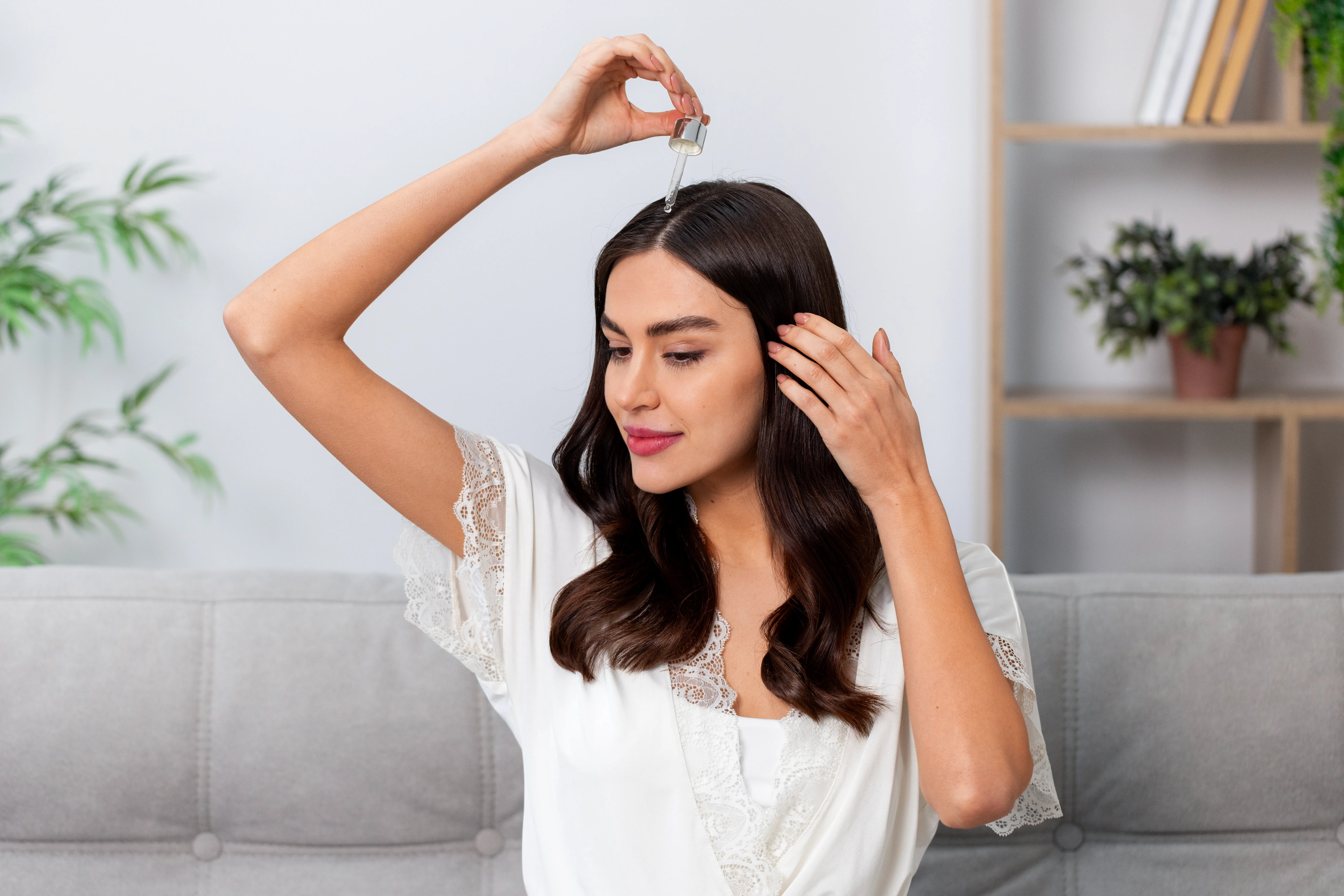
Regular scalp massage — even just 5 minutes a day using your fingertips in gentle circular motions — increases blood flow to the follicles, delivering more oxygen and nutrients. Research has shown that consistent scalp massage over several months can increase hair thickness and reduce shedding. Try it during your shower, or apply a nourishing hair oil beforehand.
Tip 02 | Wash with a Gentle, Sulphate-Free Shampoo
Washing too frequently, or using harsh detergents, strips the scalp of its natural oils and weakens the hair shaft over time. Switch to a gentle, sulphate-free shampoo that cleanses without over-drying. Oily scalps may need washing every other day, while drier scalps do well with two to three washes per week.
Tip 03 | Deep Condition Regularly to Strengthen the Hair Shaft
Use a deep conditioning mask or protein-rich treatment once a week. Apply it from the mid-lengths to the ends, leave it on for at least 10 to 15 minutes, and rinse thoroughly. Well-conditioned hair experiences significantly less breakage, meaning more of the growth your follicles produce is actually retained.
Tip 04 | Minimise Heat Styling and Always Use Heat Protection
Excessive heat weakens the hair's protein structure, causes the cuticle to lift, and leads to dryness, split ends, and breakage. Aim to air-dry where possible. When you do use heat tools, always apply a heat protectant spray and keep the temperature below 180 degrees Celsius.
Tip 05 | Eat a Hair-Supporting Diet
Include quality protein sources such as eggs, fish, legumes, and lean meat. Prioritise iron-rich foods (spinach, lentils, red meat), Vitamin C to support iron absorption, omega-3 fatty acids (oily fish, walnuts, flaxseed), and zinc (pumpkin seeds, chickpeas). Nutritional deficiencies are among the most commonly overlooked and most straightforward to correct causes of hair thinning.
Tip 06 | Handle Wet Hair with Extra Care
Hair is at its most fragile when wet, making it far more susceptible to breakage. Gently detangle with a wide-tooth comb, working from the ends upward. After washing, blot — rather than rub — your hair dry with a soft microfibre towel.
Tip 07 | Be Mindful of Hairstyles That Pull on the Roots
Tight ponytails, braids, buns, and extensions exert continuous tension on the hair follicles. Over time, this repeated pulling can lead to traction alopecia. Opt for loose, low-tension styles wherever possible. Use soft hair ties without metal clasps, and never sleep with hair pulled tightly back.
Tip 08 | Stay Hydrated and Get Quality Sleep
Aim for at least 1.5 to 2 litres of water per day to keep both the scalp and hair shaft hydrated. Prioritise seven to nine hours of quality sleep every night — the body carries out cellular repair and regeneration during deep sleep, including processes that support healthy follicle activity.
Recommended Ingredients That Support Hair Growth
| Ingredient | What It Does | Found In |
|---|---|---|
| Biotin | Supports keratin production and hair strength | Supplement or shampoo |
| Caffeine | Stimulates follicle activity and extends growth phase | Scalp serums, shampoos |
| Rosemary Oil | Boosts scalp circulation, comparable to minoxidil | Scalp oils, serums |
| Niacinamide | Improves scalp health and microcirculation | Scalp serums |
| Peptides | Strengthen hair follicles and reduce shedding | Scalp serums |
Professional Hair Treatments at Lumia Wellness
When hair thinning is persistent or linked to an underlying cause that topical products cannot address, professional treatments offer a more targeted solution:
- Platelet-Rich Plasma (PRP) Therapy — uses your own blood platelets to stimulate dormant follicles and encourage active regrowth. One of the most clinically supported non-surgical options for hair loss.
- Scalp Microneedling — creates micro-channels across the scalp to stimulate collagen production and increase serum absorption. Often performed alongside PRP.
- Mesotherapy for Hair Loss — micro-injections delivering vitamins, minerals, and amino acids directly into the scalp to nourish follicles.
- Low-Level Laser Therapy (LLLT) — energises follicles, improves scalp circulation, and encourages dormant hairs to re-enter the active growth phase.
Frequently Asked Questions
How fast does hair naturally grow?
On average, hair grows approximately 1 to 1.5 centimetres per month. While you cannot dramatically alter the rate set by your genetics, you can create the optimal conditions for your follicles to work at full capacity through the right nutrition, minimising breakage, and maintaining a healthy scalp.
How much hair loss per day is normal?
Losing between 50 and 100 hairs per day is entirely normal. Concern is warranted when you notice significantly more shedding than usual, visible thinning at the crown or temples, a widening parting, or patches of reduced density.
Can stress really cause hair loss?
Yes. Significant or prolonged stress can trigger telogen effluvium, in which a large proportion of follicles are pushed into the resting phase simultaneously — leading to diffuse shedding that typically becomes noticeable 2 to 3 months after the stressful period. This type of hair loss is usually temporary and resolves once the underlying stress is managed.
When should I see a professional about hair loss?
Seek professional advice if you notice sudden or rapid increases in shedding, progressive thinning over time, patchy or uneven hair loss, a receding hairline, or significant changes in hair texture or density. The earlier a hair loss concern is assessed, the more follicles can typically be preserved.
Ready to take control of your hair health? Book your hair consultation at Lumia Wellness today.